
University of Rochester
About our team
Advancing scientific research through the application of computing technology and expertise.
Research Collaboration
CIRC supports research and scholarship across the entire University and participates in research design, proposal writing, and manuscript preparation with faculty. The Center collaborates with faculty on grant proposals to fund research projects that leverage computational science.
Expertise and Consulting
The Center for Integrated Research Computing provides individual and group support and training across a spectrum of users. From novice users who may be unfamiliar with the command line environment of a Linux cluster, to advanced users who have compilation and optimization questions about custom-developed software, the Center serves a wide variety of students, staff, and faculty with different levels of familiarity with research computing. The Center also provides support for computational research design and implementation, software implementation and lifecycle management, application porting and tuning, data visualization and analysis techniques, and recommendations for new computational technologies and methods.
Community Building
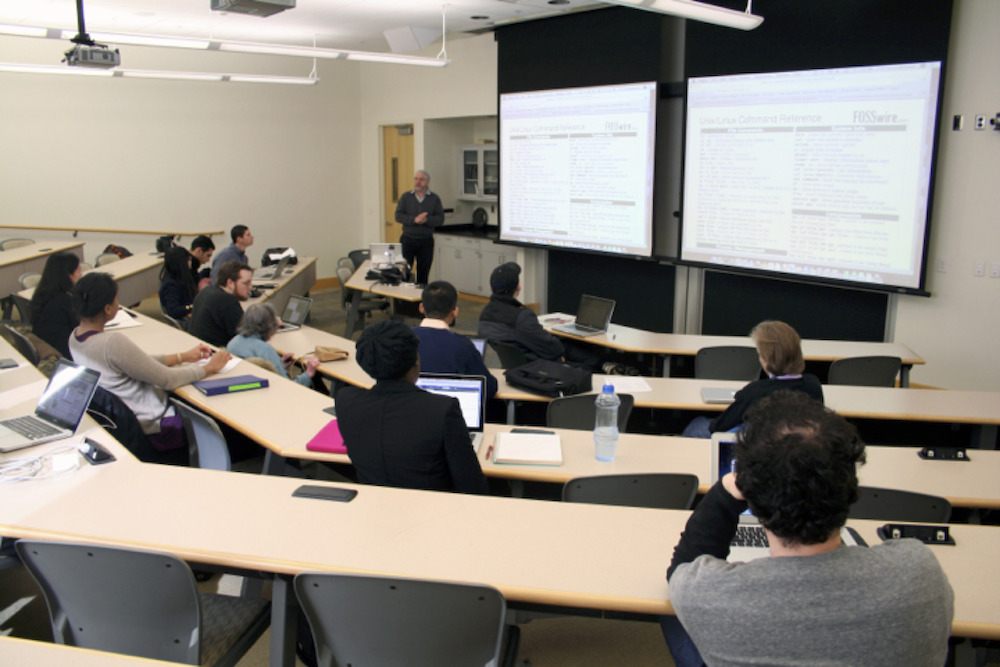
CIRC hosts a monthly CIRC Symposium, where students, postdocs, and faculty showcase their research to the University community, learn about emerging computing technologies, and participate in collaborative discussions. The CIRC Symposium provides a venue for researchers to learn about and discover new directions in using computational and informatics tools for research in a variety of fields across all departments and centers. The Center also features an annual poster session, where students and faculty can share their research results with the community.
Advanced Technology
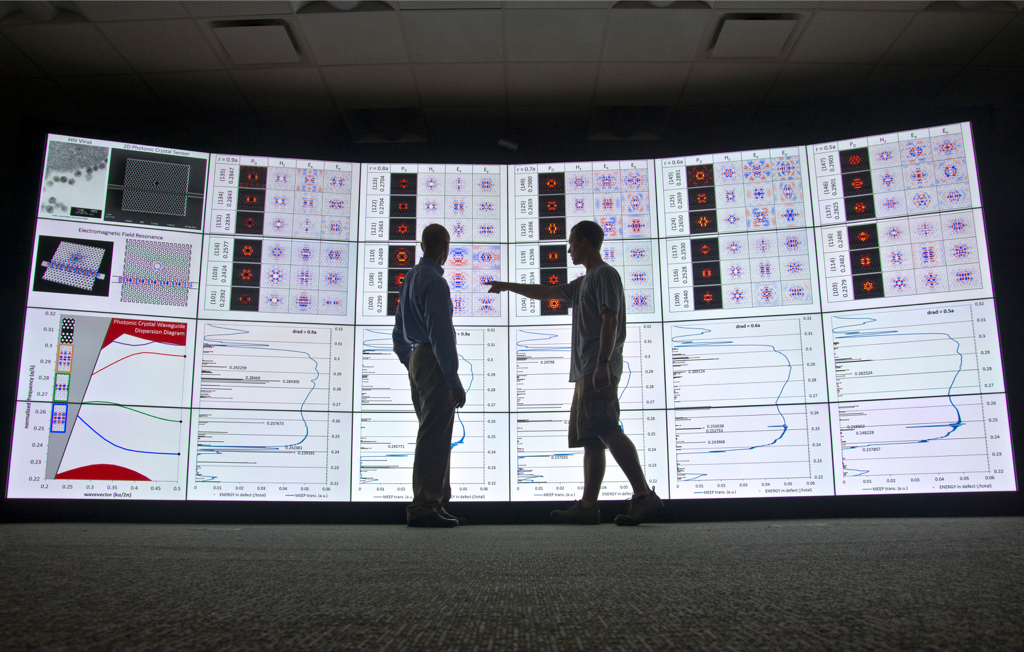
CIRC currently deploys a major computing system for high-performance computing. A Beowulf-style Linux cluster with more than 390 nodes and NVIDIA GPU cards provides high-performance computing capacity. A large number of advanced, specialized, scientific software applications and libraries are available on CIRC’s computing resources. In addition, CIRC operates the Vista Collaboratory, a visualization lab featuring a 20 feet wide by 8 feet tall, 50 megapixel display that has a high-speed optical link to the Linux cluster.
Today’s CIRC
The University of Rochester established the Center for Integrated Research Computing (CIRC) to provide researchers across the University with hardware, software, training, and support necessary to utilize computational science and computing technology in research activities in all areas of academic scholarship.
CIRC supports users across the Medical Center and River Campus from over 110 departments and centers, including disciplines from medicine, engineering, and the biological and physical sciences.
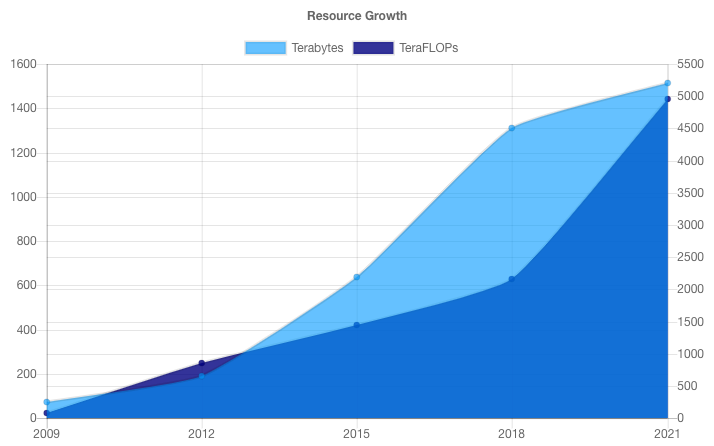
The Center currently maintains systems with an aggregated computational performance of 1,440 teraFLOPS, 5.2 petabytes of disk storage, and a variety of advanced scientific software applications and tools. Researchers that contribute additional infrastructure through start-up funds or through grant funding are provided priority access use of the facilities.
The CIRC hosts symposia where faculty and students showcase their research to the University community, learn about the application of computing technology to research problems, and participate in discussions that lead to collaborative opportunities.
The Center’s expertise, consultation services, collaboration, and community building activities are essential for facilitating the research mission of the University.
CIRC’s History
In 2005, the University recognized the need for a shared research computing resource to support both domain-specific and interdisciplinary research activities. A faculty team, consisting of 17 researchers from across the university documented the need for a central research computing resource and the opportunities presented by this resource. In addition to recommending the purchase of a large high-performance computing cluster, this team’s report recommended the formation of a university center to provide research computing support, expertise, training, and collaboration activities for the entire university community.
In late 2007, the College of Arts and Sciences, Hajim School of Engineering and Applied Sciences, and the Medical Center jointly funded the Center for Research Computing (CRC). In mid-2008, the initial computing hardware was purchased, and the CRC was officially launched.
In 2011, the center was renamed the Center for Integrated Research Computing (CIRC) to reflect its growing integration into several departments and centers across the Medical Center and River Campus.
From its launch in mid-2008 to 2021, CIRC expanded its high-performance computing systems from approximately 420 teraFLOPS of computational performance and 2 petabytes of storage space to 2021’s offering of over 480 nodes with approximately 5.2 petabytes of storage capacity. This foundational infrastructure provides roughly 1,440 teraflops of performance and is capable of delivering 126 million CPU hours per year. As of 2026, CIRC systems provide roughly 4.5 petaflops of performance and 8 petabytes of storage.
Simultaneously, the center has grown to include eight full-time staff members; the team is comprised of system administrators and computational scientists that are partially or fully funded from research grants.
Departments
CIRC supports over 600 research groups from over 150 departments and centers
across all 8 schools and divisions.
- School of Arts and Sciences
- Hajim School of Engineering and Applied Sciences
- Eastman School of Music
- School of Medicine and Dentistry
- School of Nursing
- Simon Business School
- Warner School of Education and Human Development
- Laboratory for Laser Energetics